


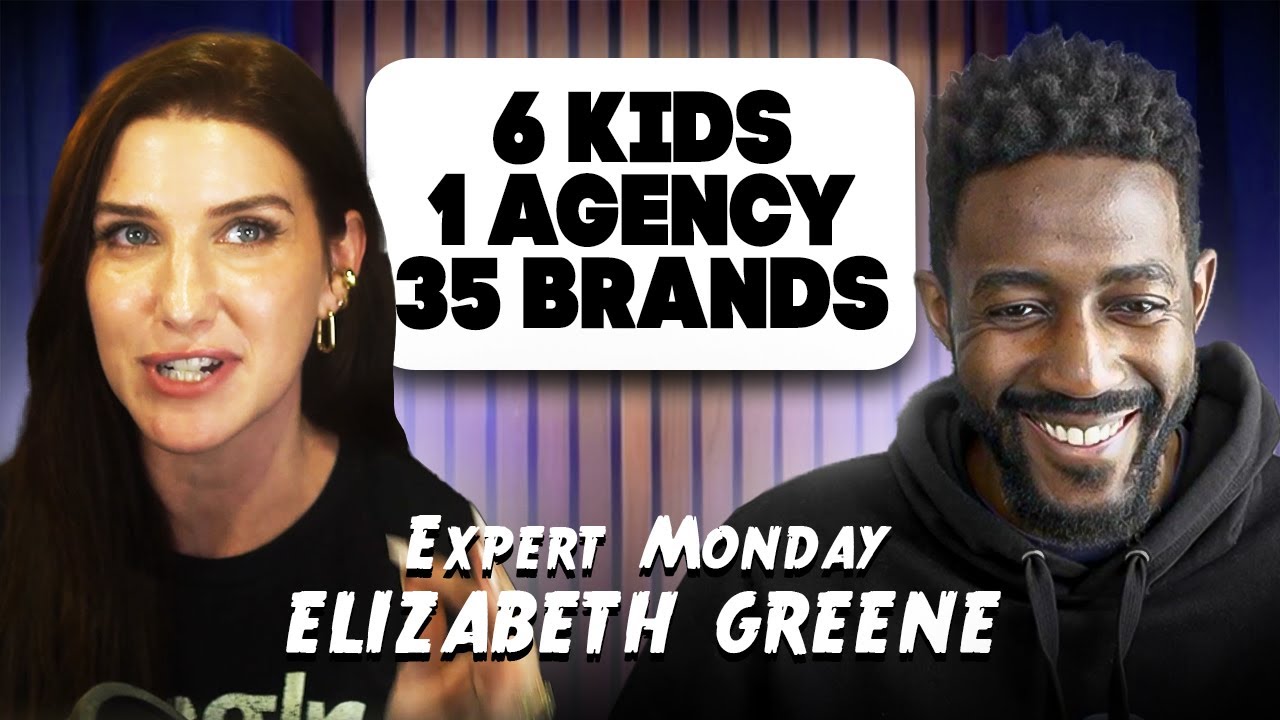
Introduction: From Stay-at-Home Mom to Managing 35+ Brands
Elizabeth Greene’s journey exemplifies how passion and necessity can create extraordinary success in the Amazon ecosystem. Starting as a homeschooling mother of six, Greene discovered Amazon selling while searching for online opportunities that would allow her family to work together. Her initial success as a seller—particularly with replenishable products—taught her the intricate dynamics of how advertising touches every aspect of an Amazon business, from inventory management to review generation.
The pivotal moment came when Greene realized her genuine enthusiasm for Amazon PPC management. “I could spend hours in spreadsheets,” she recalls, while many sellers complained about the complexity. This natural affinity for data analysis and strategic optimization set her apart in the Amazon community, which she describes as uniquely open about sharing advertising strategies.
However, the transition from managing her own ad spend to handling other people’s budgets created significant anxiety. “It’s one thing to spend my own money. It’s another thing to spend somebody else’s money,” Greene explains. This fear of failure with client investments reflects a common challenge faced by Amazon PPC professionals transitioning from personal selling to agency work.
Her husband’s encouragement proved crucial in overcoming this mental barrier, providing the confidence she lacked initially. This support system enabled Greene to take the leap from individual seller to service provider, eventually building Junglr into an agency managing over 35 brands with a team of 17 specialists.
Greene’s story demonstrates that successful Amazon advertising isn’t just about technical expertise—it requires understanding the interconnected nature of ads, listings, inventory, and reviews. Her background as a seller provides invaluable insight into the real challenges brands face, making her agency’s strategic approach more authentic and effective.
From Experience
In our experience working with Amazon sellers and agency teams, the transition from managing your own ad spend to overseeing client budgets truly is a major leap. We’ve tested similar bottom-up management styles and found, as Elizabeth Greene describes, that empowering account managers with autonomy leads to stronger results and greater retention. Real-world results show that blending strategic human oversight with selective AI assistance helps clients achieve long-term growth while avoiding the most common PPC pitfalls. Clients we’ve worked with often echo Greene’s emphasis on mindset and curiosity—those who prioritize these traits consistently outperform those with technical skills alone.
Elizabeth Greene’s Blueprint for Building a High-Performance Amazon Ads Agency
Elizabeth Greene’s approach to building Junglr into a 17-person Amazon ads powerhouse centers on what she calls a “bottom-up” management philosophy—a stark contrast to traditional top-down agency structures that rely heavily on micromanagement and rigid SOPs.
“I know I would hate my life if I had to micromanage people,” Greene explains in the interview. Her solution? Hire exceptionally qualified account managers who can drive strategy independently, supported by team leads who focus on clarity and communication rather than authoritarian oversight.
The Junglr Team Structure
- Team Leads: Serve as servant leaders providing clarity between clients and account managers, bridging strategic gaps without micromanaging daily operations
- Account Managers: The strategic backbone, owning campaign strategy and maintaining deep brand knowledge with low client-to-manager ratios (typically 5-7 brands depending on complexity)
- Expediters: Handle non-strategic tasks like reporting and data entry, creating a clear advancement path to account management roles
The Hiring Philosophy That Changes Everything
Greene’s hiring approach focuses on intrinsic qualities over technical skills: “I can’t teach you to care. That is the one thing I can teach you any skill… I can’t teach you to give a crap.” She looks for two non-negotiables: an internal drive toward excellence and genuine curiosity for continuous learning.
This philosophy enables Greene to avoid the common mistake of over-relying on automation while maintaining human strategic oversight. Her team’s low client ratios ensure each brand receives the strategic attention needed for sustainable growth—a crucial distinction in an industry where many agencies prioritize volume over quality.
The result? 100% team retention (excluding necessary terminations) and exponential client results, including 4x growth achievements with simultaneously decreasing total ACoS.
The Truth About Hiring Amazon Ad Managers: Skills vs. Mindset
Elizabeth Greene’s journey from “terrifying” first hires to building a 17-person agency reveals a counterintuitive truth: the most successful Amazon ad managers aren’t defined by their technical expertise, but by their internal drive and curiosity.
“I can teach you any skill,” Greene emphasizes, “but I can’t teach you to care. That is the one thing I can’t beat into anybody.” This hard-learned lesson shaped her entire hiring philosophy after years of scaling her agency, Junglr.
The Two Non-Negotiables
Greene’s hiring criteria boils down to two essential traits: an internal push toward excellence and continuous curiosity. These characteristics prove more valuable than years of Amazon PPC experience because they determine whether someone will thrive in her bottom-up agency structure.
Her assessment method is practical: candidates must audit an existing ad account. “Having them do an audit of an account is very telling,” she explains. This reveals not just technical knowledge, but how they approach problems, identify key issues, and communicate findings—skills that separate strategic thinkers from task-executors.
Why Internal Drive Matters More
Unlike top-down agencies where managers dictate every move, Greene’s team requires account managers who can independently maintain high standards. This approach reduces the need for constant oversight, allowing the team to focus on strategic optimization rather than micromanagement.
The result? 100% team retention over six years—unprecedented in the agency world. When team members hold themselves to high standards and actively seek improvement, they naturally excel at managing complex Amazon advertising accounts where nuanced decision-making determines success.
For agency owners and brand managers struggling with hiring, Greene’s framework offers a clear path: focus on mindset first, then develop the technical skills. The most common Amazon PPC mistakes stem from lack of strategic thinking, not technical incompetence.
Most Common Amazon Advertising Mistakes and How to Avoid Them
Elizabeth Greene from Junglr has managed over 35 Amazon brands and identified a critical pattern: sellers consistently make the same strategic error. “Here’s a big one,” Greene explains. “Hyperfocusing on short-term or hyperfocusing on long-term.” This imbalance devastates campaign performance and stunts sustainable growth.
The mistake manifests differently across accounts. Some brands chase immediate profitability, aggressively lowering bids whenever ACoS rises. Others pursue ranking at any cost, running unprofitable campaigns indefinitely. Both approaches fail because Amazon advertising requires simultaneous optimization for immediate returns and market share growth.
Consider a typical scenario: your exact match campaign shows high ACoS. The instinctive response? Lower the bid. But if this campaign drives ranking, reduced bids lower visibility, decrease sales velocity, and potentially hurt long-term positioning. “You can’t have every single campaign running at a loss,” Greene notes, “but at the same time, I need to make sure that I do have part of my ad strategy that is thinking of the long term.”
The solution lies in Greene’s percentage-of-total analysis methodology. Combine Seller Central business reports with ads data, examining each product at the parent level. Calculate percentage of total sales versus percentage of total ad spend. Products driving 40% of sales but receiving only 15% of ad spend signal expansion opportunities. Conversely, products consuming disproportionate spend relative to sales output need efficiency optimization.
Many sellers struggle with similar strategic blindspots, but Greene’s data-driven approach provides clarity. “If 20% of my budget is being spent on ads with 55% ACoS and total ACoS is 25%, that’s probably a problem.”
This methodology prevents the dangerous extremes of short-term versus long-term thinking, creating balanced strategies that optimize both immediate profitability and sustainable growth.
Why AI Can’t Replace Human Strategy in Amazon PPC (Yet)
Elizabeth Greene’s perspective on AI in Amazon advertising is refreshingly honest: “AI is only as good as its inputs, and there is no API to understand human nuance.” Despite the hype around automation, her agency Junglr maintains a human-first approach to Amazon PPC management.
The Critical Limitations of AI in Amazon PPC
Greene identifies three fundamental gaps in AI’s current capabilities. First, AI cannot access competitive intelligence that drives strategic decisions. When competitors suddenly drop prices, affecting your conversion rates, AI lacks the market context to understand why performance metrics are shifting.
Second, brand-specific nuances remain invisible to algorithms. Greene’s example of inventory management perfectly illustrates this: “Let’s say we’re overstocked on this product and in a month or two we’re going to deal with excess inventory and storage fees. I as an ad manager should make an elective decision” to increase spend despite rising ACOS. AI cannot factor in these strategic business considerations.
Third, the rapid-fire client communication and pivoting required in PPC management demands human intuition that AI simply cannot replicate yet.
Where AI Excels: Data Mining and Insights
However, Greene isn’t anti-AI. Her agency is building internal tools that leverage AI’s strengths: “AI absolutely excels when it comes to mining very large data sets and serving up insights.” She envisions AI as the perfect research assistant—working tirelessly to identify correlations and serve up strategic recommendations that humans can act upon.
The future lies in AI-assisted optimization, where algorithms handle data analysis while human strategists make the critical decisions based on market dynamics, competitive intelligence, and brand objectives that only experienced professionals can truly understand.
Sources
- Seller Central – Amazon’s official portal for business reports and ad performance data
- PPC Assist Blog – 5 Common Amazon PPC Mistakes and How to Fix Them
- PPC Assist Blog – 7 Amazon PPC Automation Tools to Boost Sales in 2025
- Amazon Advertising Learning Console – Official training and resources for Amazon advertising best practices


Leave a Reply