


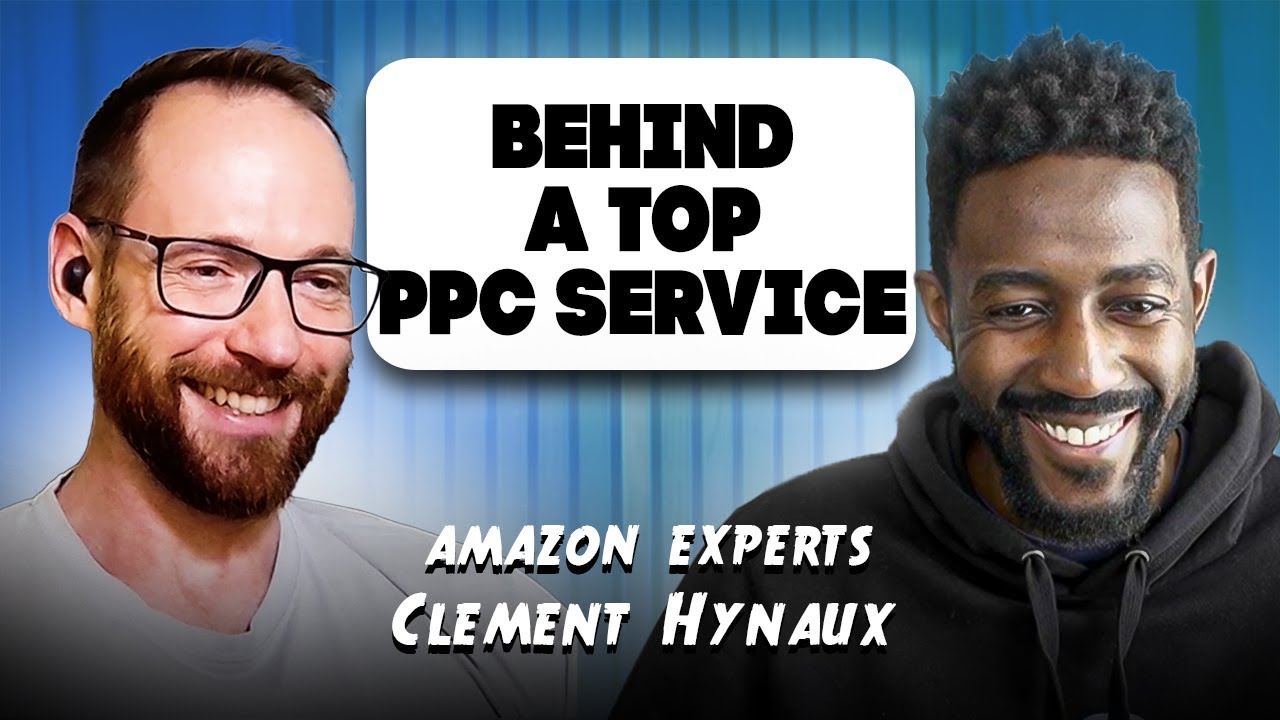
Introduction: Expert Insights on Amazon PPC Evolution in 2025
The Amazon PPC landscape continues to evolve at breakneck speed, with 2025 bringing fresh challenges and opportunities that demand expert guidance. Enter Clément Hynaux, Team Leader of the service division at Ad Badger, one of Amazon’s most respected PPC agencies. With over nine years of hands-on experience in the Amazon ecosystem, Clément brings a unique perspective shaped by an unconventional journey from animal health sciences to Amazon advertising mastery.
What makes Clément’s insights particularly valuable is his comprehensive understanding of both the technical and strategic aspects of Amazon PPC. His background in physiology and physiopathology provided the analytical foundation that now drives data-informed campaign decisions, while his experience managing accounts across multiple languages and markets offers a global perspective on Amazon PPC fundamentals.
At Ad Badger, Clément oversees the managed service team handling seven and eight-figure brands, giving him front-row access to the strategies that separate successful campaigns from costly failures. His approach emphasizes the critical balance between automation and manual oversight—a topic more relevant than ever as sellers grapple with AI-powered tools while trying to maintain campaign control.
The current Amazon advertising environment presents unique challenges: increased competition, rising costs, and algorithm changes that can make or break campaign performance. Amazon PPC automation tools promise efficiency, but as Clément reveals in his expert analysis, successful implementation requires strategic thinking beyond simple automation.
Through real-world case studies and battle-tested methodologies, this discussion with Clément illuminates the path forward for Amazon sellers seeking to optimize their advertising ROI while avoiding the common Amazon PPC mistakes that drain budgets and momentum.
From Experience
In our experience working with a wide range of Amazon sellers, we’ve consistently found that success hinges on paying close attention to campaign structure and conversion data rather than simply chasing more clicks or automating every process. Clients we’ve worked with often see immediate improvements in ROI when they implement data-driven frameworks like the 1111 structure and shift their mindset from cost-cutting to profit-focused budgeting. Real-world results show that collaboration between skilled account managers and intelligent automation delivers the most stable, scalable growth—validating Clément’s advocacy for blending human expertise with smart tools.
The Amazon Algorithm Revolution: Why Conversion Now Trumps Clicks
Amazon’s algorithm has undergone a fundamental transformation that every PPC advertiser must understand. According to Clément Hynaux from AdBadger, “What does Amazon want? They want to get the money from the click of the ads, but they want to get the money from the sale itself. So they want both of it.”
This shift represents a seismic change in how Amazon evaluates campaign performance. The platform now actively penalizes campaigns that generate clicks without conversions. As Clément explains, “If a campaign is generating clicks but no sales, they don’t like that. If a campaign generating clicks and sales, they like that.”
The Conversion-First Approach
Amazon’s A10 algorithm heavily rewards high conversion rates because they signal desirable products that contribute to Amazon’s revenue. This means your campaigns need to demonstrate not just traffic generation, but actual purchasing behavior. Understanding ROI calculation becomes crucial in this new environment.
Preserving Campaign Momentum
The algorithm assigns historical weight to campaigns, with recent performance (last 7-30 days) carrying more influence than older data. This creates a dangerous scenario for advertisers who restructure or pause performing campaigns. As Clément warns, “Campaigns have a history and Amazon rewards something that works well… you can really kill the momentum.”
Practical Implementation
- Monitor conversion rates alongside click-through rates
- Avoid unnecessary campaign restructuring when performance is strong
- Focus on avoiding common mistakes that disrupt campaign history
- Use bid adjustments rather than pausing to control underperforming elements
This algorithmic evolution demands a more sophisticated approach to campaign management, where maintaining momentum becomes as important as optimization itself.
AI vs. Manual Control: Clément Hynaux’s Balanced Approach to PPC Automation
The AI revolution in Amazon PPC has created a critical divide between those who embrace intelligent automation and those who fall victim to its pitfalls. Clément Hynaux’s experience with Ad Badger reveals a sobering truth: AI acts as a catalyst that amplifies existing capabilities rather than replacing expertise.
“If you’re bad, you’re going to use AI, you’re going to be even worse. If you’re good and you’re using AI, you’re going to be better or at least you’re going to have a bigger output because you’re going to be more productive,” Clément explains. This insight highlights why choosing the right automation tools requires understanding your current skill level and strategic goals.
The danger of complete AI reliance becomes apparent when algorithms make thousands of operations per second without human oversight. Clément emphasizes staying “in the width of the accounts” to gather experiential knowledge about products, markets, seasonality, and competitive landscapes—insights that AI cannot replicate effectively.
His semi-automated approach leverages strategic filters customized for each account’s performance characteristics. Rather than applying universal rules, he adjusts filters based on account types—recognizing that supplement companies and vendors require different KPIs due to their distinct Amazon relationships.
This balanced methodology prevents the complex, unintelligible structures that purely automated systems often create. When Clément encounters accounts with multiple ad groups per campaign and tangled targeting, he knows excessive automation has likely caused the chaos.
The key lies in using AI to enhance productivity while maintaining human intuition for strategic decisions. Avoiding common automation mistakes requires understanding that AI should amplify your expertise, not replace the critical thinking that drives successful PPC campaigns in 2025’s increasingly sophisticated advertising landscape.
The 1111 Campaign Structure: A Proven Framework That Actually Works
Clément Hynaux’s “1111” campaign structure represents a game-changing approach to Amazon PPC organization that prioritizes clarity and control. This framework—one product per campaign, one match type per campaign, one ad group per campaign, and one intent per campaign—delivers measurable results by eliminating the confusion that plagues complex campaign structures.
Why the 1111 Structure Works
This methodical approach allows precise control over campaign-level settings that apply differently to each match type. When broad, phrase, and exact keywords share a campaign, their distinct behaviors become impossible to optimize individually. The 1111 structure prevents this data pollution while maintaining campaign momentum—something automated tools often struggle with.
Strategic Implementation
For new campaigns, implement the 1111 structure from launch. However, Clément emphasizes preserving existing profitable campaigns: “If something is working, but it’s not my way of doing it, this is fine. I observe, I adjust, I try to take the most out of it.” Make incremental changes to successful campaigns rather than complete restructures that could kill momentum.
Flexible Application
The structure allows strategic flexibility—product variations under the same parent ASIN can share campaigns when they have similar characteristics. This prevents stockouts from affecting ad continuity while maintaining structural integrity.
Negative Targeting Approach
Rather than aggressive negative keyword isolation, Clément recommends controlling targeting through strategic bidding. “I would rather control my targeting with the bids,” he explains, allowing exact match campaigns higher bids than phrase match for the same keywords. This prevents cutting off potentially profitable impressions.
Avoid common structural mistakes by following data over rigid processes—if performance contradicts your planned structure, adapt accordingly while preserving what works.
Smart Budget Management and Agency Partnership Selection for Maximum ROI
According to Clément Hynaux from Ad Badger, successful Amazon PPC budget management hinges on profitability rather than arbitrary spending caps. His philosophy is simple: “If for every dollar you gave me, I gave you two, how many dollars are you gonna give me?” This approach prioritizes ROI-focused campaign management over hardcoded budget limitations.
Clément emphasizes that effective agencies focus on “growth in both revenue and profit”—not just driving more sales through increased ad spend. This distinction is crucial when selecting an agency partner, as revenue growth without profit improvement indicates poor campaign optimization.
Agency Selection Criteria
Ad Badger’s rigorous client selection process reveals what successful partnerships require. They evaluate whether sellers have the willingness to invest in listing improvements, understanding that “PPC drives impressions to listings—if your listing is bad, then it’s not going to work.”
The agency also assesses niche competitiveness and the seller’s philosophy around growth investment. Clément notes they reject accounts they know they cannot help, protecting both parties from unsuccessful partnerships.
Combating Churn Through Expectations Management
Even when delivering strong results, agencies face churn from emotional decision-making rather than data-driven choices. Clément addresses this by building trust through transparent communication and managing expectations upfront. The key is ensuring mutual fit—checking if clients have “the right philosophy” and willingness to invest in growth.
This approach to strategic partnership selection demonstrates how successful PPC management extends beyond technical optimization to encompass business relationship fundamentals.
Sources
- Ad Badger – Industry-leading Amazon PPC agency and source for Clément Hynaux’s insights
- Amazon Advertising Learning Console – Official Amazon resource for PPC best practices and algorithm updates
- Blog.PPCAssist.com – Advanced guides on Amazon PPC structures, mistakes, and ROI strategies
- Amazon Seller Central Help – Authoritative support articles on campaign management and performance metrics
Written by Nassuf Mmadi, founder of PPC Assist. Nassuf is an experienced EX-Amazon seller who has mastered the ins-and outs of PPC through his extensive experience in the market.


Leave a Reply