


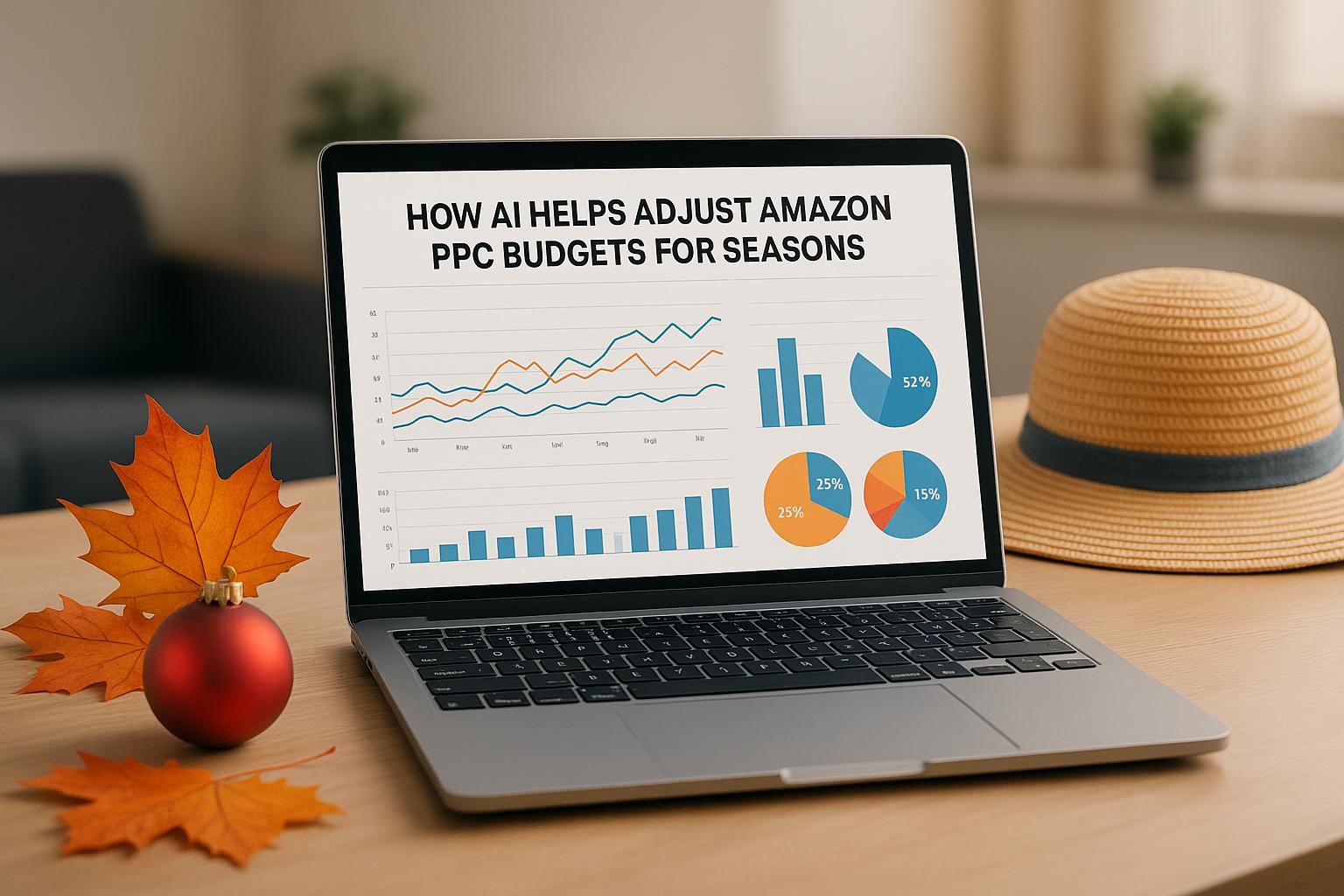
AI tools are reshaping how Amazon sellers manage their PPC budgets during seasonal shifts. Instead of relying on manual adjustments and guesswork, AI uses data like past performance, market trends, and competitor activity to recommend precise budget changes. This ensures sellers can increase visibility during high-demand periods like Black Friday or scale back during slower times, saving money while maintaining ad performance.
Key benefits include:
- Real-time adjustments: AI reacts instantly to market changes, ensuring efficient spending.
- Seasonal insights: AI identifies trends like holiday shopping spikes or regional demand shifts.
- Keyword optimization: Focuses on high-performing seasonal keywords and avoids wasteful spending.
- 24/7 monitoring: Tracks campaigns continuously, even during unpredictable periods.
While AI offers speed and precision, human oversight is crucial to handle unique business needs and prevent over-adjustments. Platforms like PPC Assist combine AI automation with seller control, making seasonal PPC management more efficient and effective.
Understanding Seasonal Trends in Amazon PPC Campaigns
What is Seasonality in Amazon PPC?
Seasonality in Amazon PPC refers to the predictable changes in consumer behavior that occur due to holidays, special events, or even weather patterns. For sellers in the U.S., being aware of these trends is crucial. These shifts can help you anticipate when ad performance might spike or dip, enabling smarter decisions about budgets and campaign strategies. Ultimately, these patterns have a direct impact on key PPC metrics.
How Seasonal Trends Affect PPC Metrics
Seasonal trends can significantly influence core PPC metrics. For instance, during high-demand periods, more advertisers compete for the same ad space, which can push up cost-per-click (CPC) rates. At the same time, consumer behavior changes might cause fluctuations in click-through rates (CTR) and conversion rates. To stay competitive and manage costs effectively, campaigns need to be adjusted dynamically, often requiring real-time budget tweaks and strategy shifts.
This Is How to Scale Amazon Ads with AI Without Wasting Time
How AI Optimizes Seasonal PPC Budgets
AI takes the guesswork out of managing seasonal PPC budgets by analyzing past performance, predicting trends, and making real-time adjustments. It taps into historical data, anticipates seasonal shifts, and fine-tunes strategies on the fly to ensure your ad spend delivers maximum impact during peak sales periods.
Learning from Historical Data
AI thrives on identifying patterns in historical data, such as sales records, traffic trends, and ad performance metrics. By diving into past campaigns, it uncovers when specific products perform best and which keywords drive the most conversions.
For instance, AI might notice that interest in winter coats starts climbing well before the coldest months or that holiday gift searches spike weeks before December. Armed with this information, businesses can allocate their budgets more effectively, targeting these windows of opportunity.
AI doesn’t stop at your internal data – it also compares your performance to broader market trends. This allows it to recommend budget shifts that help you stay competitive and capitalize on emerging opportunities. And as market conditions evolve, AI can make instant adjustments, ensuring your campaigns remain aligned with current demand.
Adjusting Budgets in Real Time
Unlike traditional PPC management, which often relies on manual changes, AI continuously monitors campaign performance and adapts budgets in real time. This means it can quickly respond to unexpected changes, whether that’s a surge in ad clicks or a drop in conversions.
For example, if a particular ad starts performing exceptionally well, AI can automatically increase the daily budget to take advantage of the momentum. On the flip side, if performance dips, it reduces spending to prevent waste. This agility ensures every dollar is spent wisely.
AI also pays attention to temporal trends. If your products sell better during specific hours or days, the system reallocates budgets to focus on those high-conversion periods. This adaptability is especially useful during flash sales or sudden spikes in demand, enabling you to maximize returns when it matters most.
Additionally, AI leverages local trends to fine-tune spending even further, ensuring relevance across different markets.
Tailoring Budgets for U.S. Shopping Patterns
AI systems trained on U.S. market data are particularly adept at navigating the unique shopping habits of American consumers. They account for predictable shifts in behavior around major events like back-to-school season, Thanksgiving, and Christmas.
For example, AI can ramp up budgets ahead of Black Friday and Cyber Monday, capitalizing on the surge in online shopping. It also knows when to scale back spending, such as during post-holiday lulls, to avoid unnecessary costs.
Seasonal periods like back-to-school shopping, which typically runs from mid-summer into early fall, are another area where AI excels. It considers regional differences too, such as varying shopping behaviors between northern and southern states, to ensure ad spend is distributed strategically.
Strategies for AI-Driven Seasonal Budget Optimization
AI takes seasonal PPC management to the next level by using data-driven strategies to fine-tune campaigns. These methods aim to maximize ROI while adapting to the unique challenges of seasonal shopping periods. Here’s how AI can make precise budget adjustments for better performance.
Dynamic Bid Adjustments Based on Competition
AI keeps an eye on competitor activity and adjusts bids in real-time to balance visibility and costs. During high-demand periods like Black Friday, when competition skyrockets, AI analyzes bid trends and market saturation to find the sweet spot between staying visible and staying profitable.
For example, the system tracks cost-per-click trends over time and adapts bids accordingly. If competition is low, it raises bids to capture more traffic. When bidding wars heat up, it may lower bids or shift focus to long-tail keywords or less crowded product categories. Think of a scenario where competitors are fiercely bidding on "winter coats." AI might redirect efforts to keywords like "warm jackets under $100", ensuring better ROI.
AI also uses time-based bidding strategies to fine-tune campaigns. Since competition varies throughout the day or week, the system increases bids during peak shopping hours and dials them back during slower times.
Keyword Optimization for Seasonal Relevance
AI doesn’t stop at managing bids – it also refines keyword strategies to boost campaign impact. By analyzing search volumes, conversion rates, and competition levels, it identifies which keywords are worth the investment and which ones should be paused or deprioritized.
For instance, AI can spot seasonal trends like a surge in searches for "Valentine’s Day gifts for him" and automatically add these terms to your campaigns. It also flags keywords that generate clicks without conversions, helping you avoid wasting money on broad or irrelevant terms.
To make the most of your budget, AI prioritizes high-performing seasonal keywords. It learns from past campaigns, tracking which terms delivered results during similar seasons, and allocates more budget to those proven winners. This ensures you’re spending on keywords that drive sales while cutting back on underperformers.
Budget Planning for Major Events
AI excels at predicting and planning budgets for major seasonal events in the U.S. By analyzing historical data and market trends, it recommends how to distribute your budget – ramping up spend ahead of peak shopping days like Black Friday and scaling back afterward.
Take the holiday season, for example. AI recognizes the extended shopping window that starts with early Black Friday deals and stretches through post-Christmas sales. It might suggest shifting a larger portion of your budget to these months, with daily adjustments leading up to key shopping dates.
Another advantage is its ability to adapt to regional trends. AI can detect localized demand spikes – like weather-driven surges in certain areas – and recommend geographic bid adjustments or budget reallocations to capture these opportunities.
Platforms like PPC Assist integrate these AI-driven strategies to help sellers optimize budgets without losing control. The AI Assistant offers tailored recommendations based on seasonal trends, giving sellers the option to review and tweak suggestions before putting them into action.
sbb-itb-442c4b6
Why PPC Assist Works Well for Seasonal PPC Budget Management
PPC Assist blends AI-powered strategies with a seller-focused approach, making it a go-to platform for managing seasonal Amazon PPC campaigns effectively.
The platform combines automation with seller oversight, analyzing campaigns in real time and offering optimization suggestions that require seller approval. This ensures timely, controlled adjustments during high-demand periods, keeping campaigns on track without sacrificing control.
Key Features of PPC Assist for Seasonal Adjustments
PPC Assist offers a detailed sales dashboard that tracks sales, costs, profits, and orders, making it easier to identify seasonal trends. Its profit and loss tracker provides insights into actual profitability, enabling smarter budget allocation. Additionally, built-in expert strategies and keyword analysis tools help sellers fine-tune their spending during peak seasons, maximizing returns.
Maintaining Control with AI-Driven Suggestions
Using real-time analytics and historical data, PPC Assist takes a thoughtful, data-driven approach to seasonal PPC management. The platform operates on a confirmation-based system, ensuring sellers retain full control over campaign adjustments. The AI Assistant reviews campaign data and suggests optimizations, but sellers decide when and how to implement changes. For routine updates, an auto mode is available, while a confirmation mode allows sellers to review recommendations before making adjustments.
Support and Resources for U.S.-Based Sellers
PPC Assist provides tailored support to help U.S.-based sellers manage seasonal campaigns with ease. Free onboarding calls include strategy discussions and platform training, while real-time chat assistance is available for interpreting AI recommendations or fine-tuning strategies mid-season. Tutorial videos and guides walk sellers through key optimization techniques, such as budget planning and keyword adjustments. All financial data is displayed in U.S. dollars and follows American business reporting standards, ensuring clarity during performance reviews and budget planning. These features and resources equip U.S.-based sellers with the tools they need to navigate seasonal campaigns confidently and efficiently.
Pros and Cons of AI in Seasonal PPC Budgeting
Knowing the strengths and weaknesses of AI can help U.S. sellers decide when to trust automated tools and when to step in manually. AI brings both benefits and challenges to managing seasonal Amazon PPC campaigns, helping sellers strike the right balance between automation and hands-on control.
Advantages of AI in Seasonal PPC Management
AI shines in seasonal campaigns thanks to its speed and precision. Adjusting budgets manually can take hours – or even days – especially across multiple campaigns. AI, on the other hand, processes performance data and makes adjustments much faster. This speed is a game-changer during high-traffic events, where quick tweaks can make a big difference in revenue.
24/7 monitoring is another major perk. AI keeps an eye on your campaigns around the clock, tracking performance metrics, competitor activity, and market trends. This is especially useful during unpredictable holiday shopping periods when consumer behavior can shift in an instant.
AI’s data-crunching power allows it to analyze massive amounts of information – keywords, bid changes, inventory levels, and conversion rates – all at once. This capability helps it make smarter budget allocation decisions that would be tough to replicate manually.
Its pattern recognition abilities are also impressive. AI can spot seasonal trends you might overlook, such as connections between weather changes, social media buzz, or shifts in buying habits. These insights allow for timely adjustments that align with emerging opportunities.
| Advantages | Limitations |
|---|---|
| Detects complex seasonal trends | Lacks nuanced business understanding |
| Adapts to market changes instantly | Needs strong historical data to perform well |
| Manages multiple campaigns at scale | Risks over-adjusting without oversight |
| Processes large data sets effectively | May overlook unique brand strategies |
| Operates continuously, day and night | Requires human input for strategic decisions |
While these strengths are undeniable, sellers must also navigate AI’s limitations.
Limitations and Need for Human Oversight
Despite its capabilities, AI has its shortcomings, which highlight the need for human involvement. One key challenge is its difficulty with contextual understanding. AI might increase budgets for seasonal items during an unusually warm winter without realizing that consumer habits have shifted away from those products.
Frequent adjustments can also lead to over-optimization. During chaotic sales periods, AI might react to every small performance dip or spike, creating instability. Sometimes, a steady and consistent approach works better than constant tweaking.
AI also has strategic blind spots. It often prioritizes short-term metrics over long-term goals. For example, it might cut budgets for brand awareness campaigns during peak sales, potentially hurting your brand’s growth down the line.
Another limitation is its dependency on data. AI needs high-quality historical data to make accurate predictions. If you’re launching a new product or running your first seasonal campaign, AI might struggle to deliver reliable results, making human judgment even more critical.
Finally, quality control issues can arise if AI misinterprets data. For instance, a sudden traffic spike caused by bots or technical glitches might prompt budget changes that don’t align with actual market conditions. Human oversight is crucial to separate real trends from anomalies.
The best seasonal PPC strategies combine AI’s efficiency with human expertise. Let AI handle the heavy lifting – like analyzing data and making routine adjustments – while you provide the strategic insight and judgment needed to navigate unexpected challenges. Together, this partnership ensures a well-rounded approach to seasonal PPC management.
Conclusion: Streamlining Seasonal PPC Budget Adjustments with AI
Managing seasonal Amazon PPC campaigns doesn’t have to be overwhelming. AI takes the hassle out of manual, time-intensive adjustments, turning them into streamlined, automated processes. By leveraging historical data, spotting trends, and making real-time changes, AI empowers sellers to seize seasonal opportunities while steering clear of costly missteps.
AI’s ability to process massive data sets instantly means routine budget tweaks happen automatically, freeing sellers to concentrate on strategy. The combination of AI-driven automation and human oversight strikes the perfect balance for effective seasonal PPC management. Platforms like PPC Assist exemplify this synergy, offering tools that simplify and enhance the process.
PPC Assist merges AI automation with seller control, delivering real-time insights and actionable suggestions that sellers can approve or modify. Its AI Assistant supports both automatic and confirmation-based campaign management, ensuring sellers retain control while benefiting from automated precision. Features like keyword analysis and multi-store management are particularly useful during busy seasonal periods when juggling multiple campaigns can get tricky.
For U.S. sellers, tapping into AI for seasonal budget management is no longer just a helpful tool – it’s becoming a necessity to stay ahead. Key shopping events like Black Friday, back-to-school season, and the holidays demand swift action and accurate budget allocation. AI delivers the speed and precision needed to thrive during these moments, while human judgment ensures campaigns align with broader business goals.
FAQs
How does AI distinguish seasonal trends from regular market changes when adjusting Amazon PPC budgets?
AI excels at spotting seasonal trends by diving into large sets of historical and real-time data to uncover patterns that reliably repeat at certain times of the year. These trends differ from short-term market changes because they follow predictable cycles, making them easier for AI to identify and anticipate.
With this insight, AI fine-tunes your PPC budgets and bids, adapting them to match these trends. This means your campaigns are primed to perform their best during busy seasons while avoiding wasteful spending during quieter periods. The result? Smarter ad spending and a better return on investment all year long.
Why is human oversight important when using AI to adjust Amazon PPC budgets?
The Importance of Human Oversight in AI-Driven Amazon PPC Budget Adjustments
While AI is excellent at crunching numbers and handling repetitive tasks, it can’t entirely grasp the fine details of your business goals or predict sudden shifts in the market. This is where human oversight becomes critical. By combining AI’s data-driven insights with human judgment, you can make sure that decisions stay aligned with your overall strategy and remain flexible enough to handle unexpected changes.
Human involvement also plays a key role in maintaining ethical decision-making and avoiding an overdependence on automation. Striking this balance between AI’s efficiency and human expertise ensures smarter campaign management and delivers better outcomes over time.
How can Amazon sellers in the U.S. use AI to adapt their PPC campaigns to regional shopping trends?
Amazon sellers in the U.S. can leverage AI tools to tap into regional shopping trends by analyzing data on consumer behavior, preferences, and demand across various states and cities. With these insights, sellers can fine-tune their bids, keywords, and ad content to match local shopping patterns and reflect regional nuances.
To get the best results, campaigns should align with U.S. standards, such as using the dollar ($) currency, imperial measurements, and language that feels natural to American shoppers. AI tools that blend automation with human input can help sellers sharpen their strategies while maintaining full control over their campaigns.


Leave a Reply