


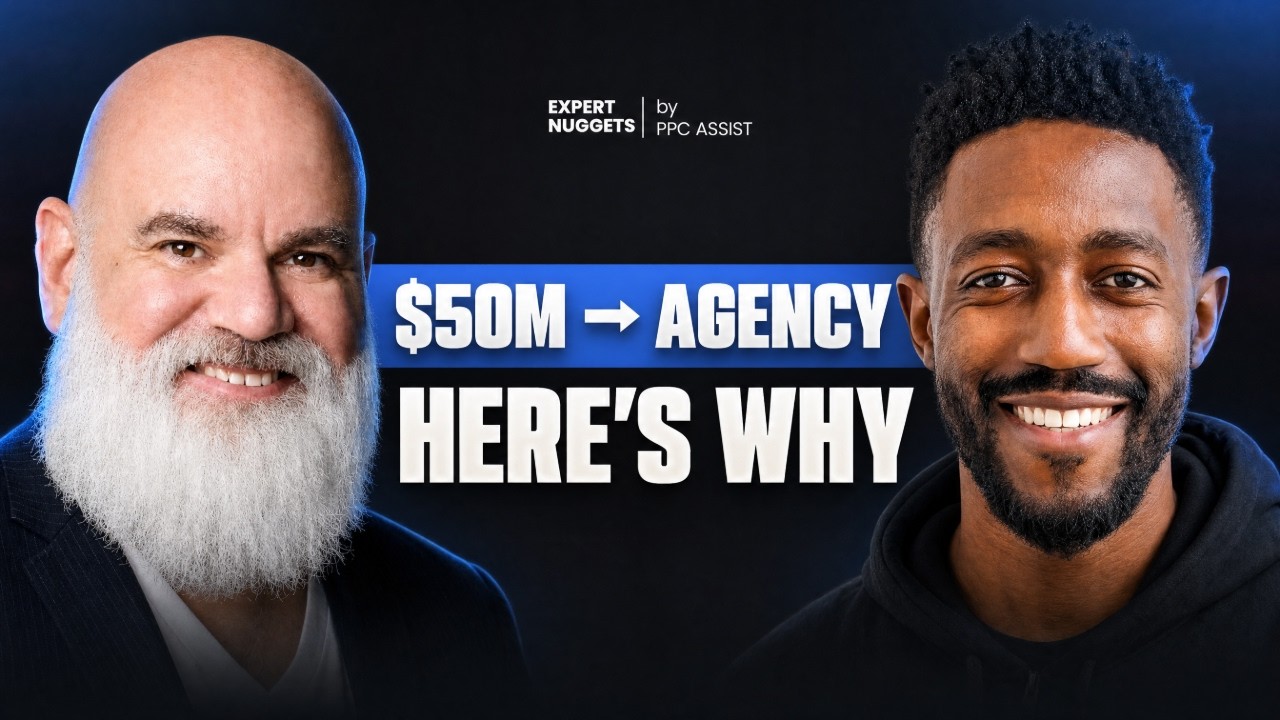
Introduction: From $50 Million Seller to Agency Pioneer
In the constantly evolving world of ecommerce, few leaders can claim the unique perspective of Abe Chomali. His journey reads like a comprehensive history of digital commerce itself—beginning with magazine advertisements in 1991, transitioning through Yahoo stores in 1999, and ultimately building a $50 million annual ecommerce empire by the time Amazon disrupted everything.
What sets Chomali apart isn’t just the scale of his success, but his willingness to walk away from it. In 2018, at the peak of his selling career, he made a bold decision that would reshape his role in the industry. Rather than continue fighting the changing landscape, he pivoted to launch XP Strategy, transforming decades of seller insights into what would become one of the most respected Amazon advertising agencies in the industry.
“I always liked advertising the best,” Chomali reflects on his transition. “Action leads to business. If I make a listing, I get orders afterwards. If I change a price, I get orders afterwards. If I run an ad, I get orders.” This philosophy would become the foundation for an agency that now manages advertising for 50+ brands with a team of 20 professionals.
What makes Chomali’s perspective invaluable is this rare seller-to-agency evolution. He’s lived through every major shift in ecommerce—from customers who wouldn’t trust computers with credit cards to today’s AI-driven shopping assistants. This experience gives him unique insights into how Amazon PPC actually works and what really drives sustainable growth.
In an industry full of theoretical expertise, Chomali brings battle-tested wisdom from both sides of the seller-agency relationship, making his approach to modern challenges like Amazon DSP, AI integration, and multi-channel advertising strategies particularly worth understanding.
From Experience
In our experience working with sellers and agencies navigating the Amazon landscape, we’ve seen firsthand how strategies need to shift as the market evolves. Clients we’ve worked with often encounter the same inventory pressures and decision points Abe describes, especially as new marketplace models and advertising platforms emerge. Real-world results show that early adopters who remain flexible—both in hiring and advertising approaches—consistently outperform those who stick with rigid, outdated methods. This mirrors the principles Abe has applied throughout his career, reinforcing the practical value of adaptability in ecommerce.
Abe Chomali’s Journey: Building an Empire from Magazine Ads to Amazon Dominance
Abe Chomali’s entrepreneurial journey spans an incredible 30+ years, starting long before Amazon even existed. His story begins in 1991, when he was placing advertisements in the back of camera magazines—a time when consumers literally called phone numbers to place orders because the internet wasn’t yet a shopping destination.
“We used to run advertising in the back of camera magazines,” Abe recalls. The trust dynamics were completely reversed compared to today—customers would browse websites for information but insisted on speaking with humans before purchasing. His company needed 20 phone salespeople working full-time because customers wouldn’t trust entering credit card numbers online.
When ecommerce emerged in 1999, Abe immediately recognized where shoppers were headed. “Wherever the shoppers are, this is where you have to be,” he explains. He started with Yahoo Stores, then moved to Google advertising with standalone websites, always maintaining the mindset of being first to new opportunities rather than following the crowd.
His Amazon journey began in 2009, relatively early in the marketplace’s third-party seller program. By understanding that Amazon PPC fundamentals hadn’t changed much from traditional advertising principles, Abe built his business to over $50 million annually.
The key to his success? Mental flexibility and early adoption. “We know that competition is going to come,” he notes. “If we can be the first one, we can be there for a day or a month or a year before everybody else.” This philosophy drove him to constantly scout new selling platforms—from Home Depot to Target when they opened their marketplaces.
Abe’s approach demonstrates that while automation tools evolve, the core principle remains unchanged: identify where customers are shopping and establish your presence before the market becomes saturated. His journey from magazine ads to Amazon dominance proves that adaptability, not just technical skills, drives long-term ecommerce success.
The Great Pivot: Why He Walked Away from $50 Million to Start XP Strategy
By 2018, Abe Chomali had built what most would consider the ultimate ecommerce success story: a $50 million annual business selling cameras and electronics that started with magazine ads in 1991. But walking away from that empire to launch XP Strategy wasn’t just a career change—it was an escape from the crushing weight of inventory stress that threatens many sellers today.
“I had $10 million bills,” Chomali reflects on those peak years. “I didn’t even sell the first part of my December sales yet and it’s sitting like a weight.” The financial pressure of managing massive inventory orders months in advance, combined with Amazon’s marketplace evolution, fundamentally disrupted his business model.
Amazon’s transformation from a simple selling platform to a complex ecosystem forced many established sellers to adapt or exit. As major brands began selling directly on Amazon, traditional resellers like Chomali found their margins squeezed and their value proposition diminished. “A lot of brands that used us as the way to sell to shoppers, they went on Amazon themselves. They didn’t want to work with us anymore.”
Rather than chase his former revenue levels, Chomali made a strategic pivot to what he’d always enjoyed most: advertising. “I always liked advertising the best,” he explains. “You can do something and it makes sales. If I make a listing I get orders afterwards. If I change a price I get orders afterwards. Action leads to business.”
This honest assessment of his strengths and preferences drove him to help other brands succeed instead of battling inventory nightmares. His agency now serves 50+ brands with a 20-person team, applying decades of marketplace experience to optimize advertising ROI without the stress of managing millions in inventory.
The lesson for today’s sellers: sometimes the biggest growth comes from stepping back and focusing on what you do best.
Amazon DSP in 2026: When It’s Worth the Investment (And When It’s Not)
Amazon DSP remains one of the most misunderstood advertising investments on Amazon. According to Abe Chomali from XP Strategy, “DSP is very interesting to me, but for most brands DSP is not so valuable.” His agency’s experience managing 50+ brands reveals the stark reality behind DSP’s promise versus performance.
The Real Criteria for DSP Success
- Lifetime value matters most. “If you’re selling a product that you sell once for $19.99, it’s not going to be a good use for DSP,” Abe explains. “If you have a product for $199.99 that people buy eight times, this is $1,600 lifetime value, this is worth using for DSP.”
- Consideration time determines effectiveness. DSP excels for purchases requiring research and deliberation. “For impulse purchases, we find that DSP is less useful than for things where people take time to think about it,” he notes. Furniture, electronics, and high-ticket B2B products perform significantly better than consumables.
- Multi-channel presence amplifies results. Brands selling only on Amazon see limited DSP value compared to those with retail distribution or D2C sites. Understanding your advertising ROI becomes critical when evaluating DSP against traditional sponsored ads.
When to Avoid DSP Investment
Most brands should redirect DSP budgets elsewhere. If your average order value sits below $50, your consideration cycle is under 24 hours, or you’re selling exclusively on Amazon, focus on optimizing sponsored products campaigns instead.
The agency perspective is clear: “You have to be clear on that. Don’t just look at DSP like, ‘oh, everybody is talking about it. I want to run it.’ Make sure it fits for you.” DSP success requires strategic alignment, not industry hype.
Building an AI-Powered Agency Team: Abe’s Hiring Philosophy for the Future
When Abe Chomali’s agency XP Strategy grew to over 50 brands and 20 team members, his hiring philosophy evolved beyond traditional resume credentials. “We hire for intelligence,” Abe explains, emphasizing that impressive job histories often mask candidates who can’t actually solve problems. His approach focuses on three core traits: intelligence, communication skills, and mental flexibility.
Testing Problem-Solving Over Experience
Abe’s interview process centers on practical scenarios rather than past achievements. He presents candidates with real situations they might encounter and asks, “How would you handle this?” This reveals whether someone can think through problems independently rather than rely on memorized responses. Amazon PPC’s constant evolution demands team members who can adapt quickly to new features and changing algorithms.
The Honesty Test That Reveals Character
One of Abe’s most revealing interview questions is deceptively simple: “What part of your work do you hate doing?” Candidates who claim they love everything immediately raise red flags. “If you cannot be honest with me in the interview about what you’re good at and less good at, what happens when an account has a bad day?” he asks. This question tests self-awareness and honesty—crucial traits for handling the inevitable challenges in Amazon PPC management.
AI Fluency as a Flexibility Indicator
When evaluating mental flexibility, Abe asks candidates about their AI tool usage. Simply answering “ChatGPT” isn’t enough. He wants to hear about different tools for different purposes and evidence that candidates stay current with evolving technology. “Amazon PPC has new features every week,” he notes. “If you don’t have mental flexibility, we’re not the right fit.”
This hiring philosophy enables XP Strategy to integrate AI as a “quiet engine” underneath their operations while maintaining human oversight and strategic thinking.
Sources
- Amazon Ads – Overview of Amazon DSP and advertising solutions
- PPC Assist Blog – Amazon PPC Basics: How it Works
- PPC Assist Blog – 7 Amazon PPC Automation Tools to Boost Sales in 2025
- Amazon Seller Central – Official resources for marketplace and advertising best practices
Written by Nassuf Mmadi, founder of PPC Assist. Nassuf is an experienced ex-Amazon seller who has mastered the ins-and-outs of PPC through his extensive experience in the market.


Leave a Reply