


AI is transforming how Amazon sellers manage ad campaigns. By automating keyword management, tools like PPC Assist save time, reduce errors, and improve ad performance. Instead of manually analyzing data and adjusting bids, AI handles these tasks in real-time, ensuring every dollar is used effectively. Sellers using AI report saving over 10 hours per week and reducing their Total Advertising Cost of Sale (TACoS) by an average of 4.7%.
Key Insights:
- Manual Management Challenges: Time-consuming, error-prone, and hard to scale as campaigns grow.
- AI Advantages: Automates bid adjustments, analyzes trends, and scales effortlessly with business growth.
- Control Options: Tools like PPC Assist offer features like confirmation modes, letting sellers stay in charge of key decisions.
If you’re managing multiple campaigns or scaling your business, AI tools can simplify your workflow and improve results. While manual management works for small setups, AI-driven solutions are essential for long-term growth.
I Let AI Manage My Amazon PPC for 30 Days (This is what happened)

1. Manual Keyword Management
Managing keywords manually means staying on top of data and making constant bid adjustments. While it gives you full control over every decision, it also comes with some clear challenges that can affect your profitability.
Efficiency
Manual keyword management takes a lot of time – especially if you’re juggling multiple campaigns. Sellers often find themselves bouncing between Seller Central, reports, and spreadsheets just to keep track of performance. Daily tasks include reviewing reports, spotting negative keywords, tweaking bids, and keeping an eye on budgets. Each step requires precision, and as the data piles up, the workload becomes overwhelming.
As campaigns grow, it gets harder to track which keywords are driving profits and which ones are draining resources. This focus on routine tasks can leave little room for strategic planning, making the process not only inefficient but also more prone to errors.
Accuracy
Speaking of errors, manual keyword management is far from foolproof. With so much data to handle, it’s easy to miscalculate a bid or forget to add a negative keyword. These small mistakes can lead to wasted ad spend. On top of that, understanding how keywords perform requires looking at seasonal trends, competitor actions, and conversion rates – all while trying to keep up with Amazon’s constantly changing algorithm.
Another issue is subjectivity. Different sellers might interpret the same data in completely different ways, which can lead to inconsistent decisions about bid changes, keyword pauses, or targeting strategies.
Scalability
As your business grows, the cracks in manual management start to show. Managing a handful of products and keywords may be doable, but things quickly spiral as campaigns and marketplaces expand. The more campaigns you run, the harder it becomes to stay on top of everything, increasing the chances of missed opportunities or mistakes. Plus, the time spent on repetitive tasks takes away from focusing on long-term strategies or identifying new keyword opportunities.
Control
One undeniable benefit of manual management is the control it provides. You get to decide which keywords to target, how much to bid, and when to make adjustments. This level of control allows for more nuanced decisions – like sticking with a keyword that may not perform well in the short term but helps with brand awareness or ranking over time. However, this hands-on approach is incredibly time-consuming and can slow down your ability to make quick, strategic moves that could maximize your ROI. While manual control can feel empowering, it often comes at the cost of efficiency and growth.
2. AI-Driven Keyword Management (e.g., PPC Assist)
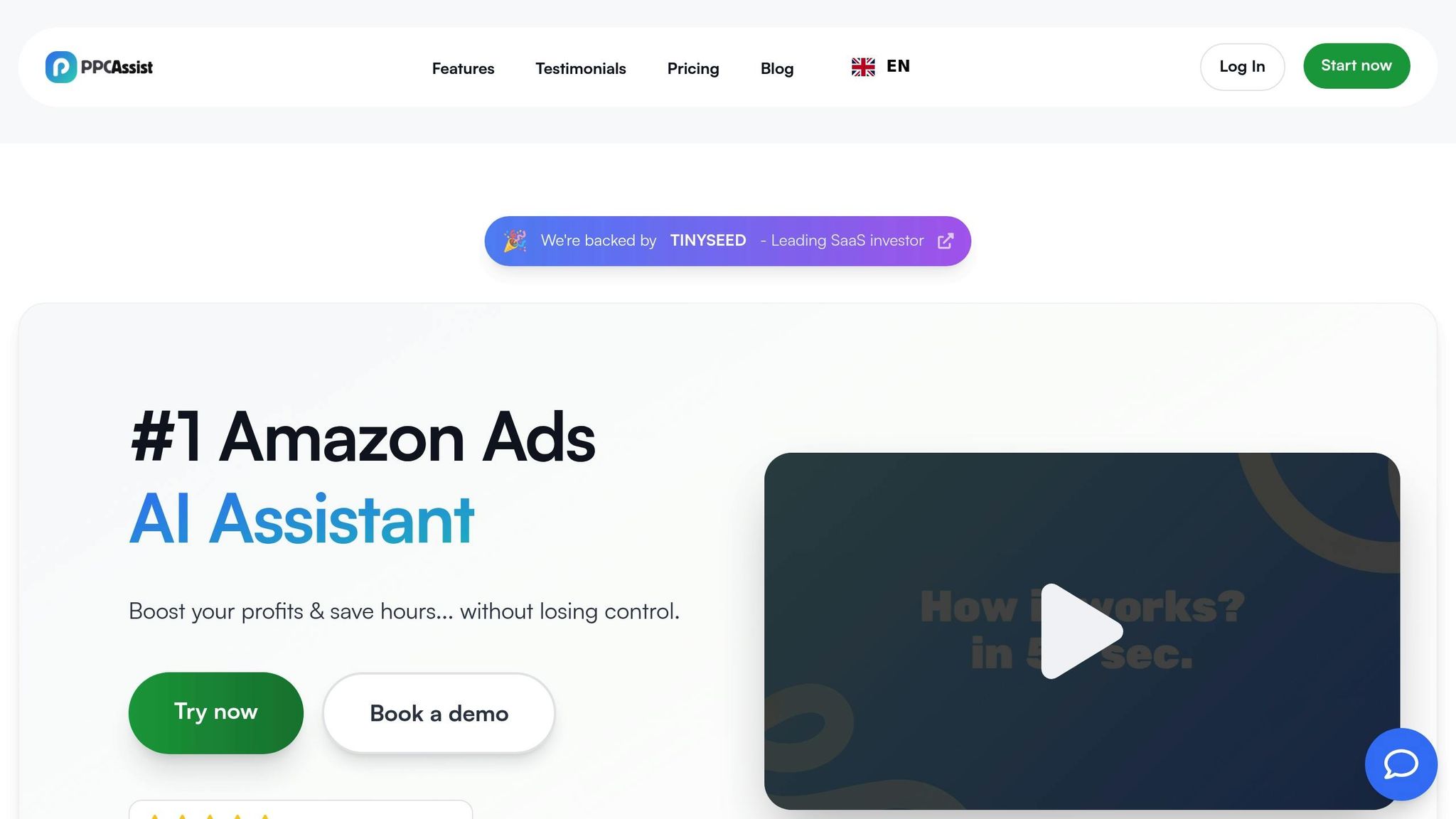
Traditional manual keyword management has its limits, especially when it comes to scaling and keeping up with dynamic market shifts. AI-driven strategies are changing the game, automating complex tasks while still allowing sellers to maintain strategic control over their campaigns.
AI-powered keyword management tools like PPC Assist are reshaping how Amazon sellers handle PPC campaigns. By automating data analysis and adjustments, these systems eliminate the need for tedious spreadsheet work, enabling sellers to focus on higher-level strategies. AI systems process immense amounts of real-time data, making decisions based on performance trends and market conditions.
Efficiency
Platforms such as PPC Assist take over the labor-intensive aspects of keyword management. They continuously monitor campaign performance, adjust bids automatically, and analyze a vast array of data points, from search trends to competitor activity. This automation frees sellers from the daily grind of manual adjustments, allowing them to concentrate on strategic planning.
For example, PPC Assist operates in either auto or confirmation mode, processing performance data instantly and offering actionable recommendations. This reduces what used to take hours of manual management to just a few minutes.
When a keyword starts to outperform or underperform, the AI reacts immediately, adjusting bids in real-time. This quick responsiveness is especially critical during high-traffic shopping events or when competitors make sudden moves in the market. The result? A more efficient and accurate keyword optimization process.
Accuracy
AI systems excel in precision by relying on data-driven algorithms rather than subjective human judgment. Unlike manual management, which depends on a seller’s ability to identify patterns and make calculations, AI analyzes historical data, seasonal trends, and conversion metrics to make informed decisions. This eliminates guesswork and reduces the risk of human error.
Machine learning algorithms can identify trends, such as which keywords perform best on specific days, enabling smarter bidding strategies. By predicting performance rather than relying on static rules, these systems maximize ROI with finely tuned adjustments.
Platforms like PPC Assist integrate expert rules into their algorithms, combining proven Amazon advertising strategies with the precision of automation. This hybrid approach ensures that decisions are not only data-backed but also aligned with industry best practices. Sellers benefit from consistent and reliable optimization, regardless of their experience level or time constraints.
Scalability
One of the standout advantages of AI-driven keyword management is its ability to scale effortlessly alongside business growth. Whether managing campaigns for 10 products or 1,000, the AI handles each with the same level of precision and attention. This makes it especially valuable for sellers expanding into new markets or rolling out multiple product lines.
With multi-store management capabilities, sellers can oversee campaigns across multiple Amazon marketplaces from a single dashboard. The AI adjusts its strategies based on each market’s unique characteristics while maintaining consistent optimization standards. Achieving this level of global oversight manually would require a large team of specialists.
Interestingly, as campaigns grow in complexity, AI systems become even more effective. With larger datasets to analyze, the algorithms can identify patterns across campaigns and optimize strategies holistically. This approach often uncovers opportunities that might be missed when managing campaigns individually.
Control
Modern AI platforms like PPC Assist strike a balance between automation and seller control. They offer confirmation modes and detailed reporting, ensuring that sellers remain in charge of their campaigns. Instead of functioning as a mysterious "black box", these systems provide clear explanations for their recommendations, allowing sellers to approve or reject changes.
The AI acts as a collaborator, explaining its strategies and offering performance insights. This ensures that sellers understand the reasoning behind each recommendation and can make informed decisions about their long-term goals.
Sellers can also define budget limits, set strategic priorities, and establish parameters, while the AI takes care of the tactical execution. This partnership ensures that campaigns align with broader business objectives, combining the efficiency of automation with the strategic insight that only a human can provide. The result is a system that optimizes every advertising dollar while keeping sellers firmly in control.
sbb-itb-442c4b6
Pros and Cons
When comparing manual and AI-driven keyword management, it’s essential to weigh the benefits and drawbacks of each approach. Both methods have their strengths and limitations, and the choice often comes down to your business goals, available resources, and operational needs. Below is a quick breakdown to help Amazon sellers better understand these trade-offs.
Manual keyword management gives you full control and allows for highly customized strategies, but it demands a significant time commitment and can be challenging to scale. On the other hand, AI-driven tools like PPC Assist streamline processes with data-driven precision and automation, though they may require some initial learning and offer less creative flexibility.
| Approach | Pros | Cons |
|---|---|---|
| Manual Management | • Full control over strategy and decisions • Tailored to brand-specific needs • No extra tool subscription costs • Flexibility in creative decision-making • Immediate adjustments possible |
• Time-intensive daily tasks • Difficult to scale across multiple campaigns • Higher risk of human error • Struggles with large datasets • Requires constant monitoring |
| AI-Driven Management | • Automated optimizations and bid adjustments • Processes large datasets in real time • Scalable across numerous campaigns • Consistent performance tracking • Reduces manual workload significantly |
• Requires a learning period for best results • Subscription costs (e.g., PPC Assist starts at $109/month) • Limited brand-specific insights • Less direct control over individual actions |
Cost Considerations
Cost is often a deciding factor. While manual management doesn’t require software subscriptions, it comes with hidden labor costs, such as the time spent on routine tasks. For small businesses, these costs can quickly add up. AI-driven tools like PPC Assist may seem expensive upfront, with subscription fees starting at $109 per month, but they can save time and improve efficiency, making them a worthwhile investment for many sellers.
Limitations of AI-Driven Tools
AI systems, while efficient, may struggle to capture the nuances of a brand’s unique strategy. For instance, they might not fully grasp seasonal trends, sudden market shifts, or the specific messaging needed for a product launch. This could result in ad campaigns that feel generic. Additionally, there’s a learning curve. Without proper onboarding – such as tutorials or support calls offered by platforms like PPC Assist – it’s easy to misuse features or misinterpret data. AI tools often need time to gather data and refine their algorithms, meaning results might take a while to stabilize.
Balancing Automation and Control
One common concern with AI-driven management is the reduced level of direct control. Sellers who prefer hands-on involvement might find this limiting. However, tools like PPC Assist address this by offering features like confirmation modes, where sellers can approve changes before they’re implemented. This strikes a balance between automation and maintaining strategic oversight.
Scalability for Growing Businesses
For businesses looking to scale, the advantages of AI are hard to ignore. Managing hundreds of keywords manually becomes impractical, whereas AI tools can handle this workload seamlessly. By automating routine tasks, sellers can shift their focus to higher-level strategies, giving them a competitive edge in a crowded marketplace. While the initial setup and learning phase might require some patience, the long-term benefits of AI-driven management often outweigh these early challenges.
Conclusion
Managing keywords manually might work when you’re just starting out, but it quickly becomes overwhelming as your campaigns grow and Amazon’s marketplace gets more competitive.
That’s where PPC Assist steps in. By processing massive amounts of real-time data and making automatic bid adjustments, it takes the guesswork out of campaign management. As highlighted earlier, AI-driven tools like PPC Assist address the challenges of manual management by improving efficiency, accuracy, and scalability – all while keeping sellers in control through confirmation modes.
The benefits are clear: more time to focus on growing your business and better performance from your ad campaigns. For smaller sellers with limited budgets, manual management might suffice in the beginning. But as your catalog expands and ad spend increases, the time saved and performance gains from automation often outweigh the cost. PPC Assist’s monthly subscription is designed to be a smart investment, delivering measurable improvements in ROI and operational efficiency.
Data consistently supports this shift – sellers who adopt AI-driven management see better returns compared to those sticking with manual methods. With automated optimizations, the ability to scale campaigns, and expert-driven strategies, tools like PPC Assist provide a strong foundation for long-term growth in Amazon’s competitive advertising environment.
If you’re looking to maximize your Amazon advertising ROI, AI-driven optimization isn’t just an option – it’s becoming a necessity. The real question is: how soon can you start leveraging it?
FAQs
How can AI tools like PPC Assist boost ROI in Amazon Ads compared to manual keyword management?
AI tools such as PPC Assist are transforming Amazon Ads by streamlining key processes like keyword optimization, bid adjustments, and budget allocation. By leveraging real-time data analysis, these tools pinpoint top-performing keywords, cut down on unnecessary ad spend, and refine ad targeting – all while reducing the need for manual work and lowering the risk of human mistakes.
With capabilities like keyword forecasting and actionable insights, these tools empower advertisers to make smarter, data-backed decisions. The result? Higher click-through rates, improved campaign outcomes, and an ad budget that works harder to deliver stronger returns.
What challenges might arise when using AI tools for Amazon ad campaigns?
AI tools can bring a lot of value to Amazon ad campaigns, but they aren’t without their challenges. One of the main concerns is the lack of transparency. AI systems often make decisions without offering clear explanations, leaving advertisers unsure of how or why certain choices were made. This can make it difficult to fully trust the process.
Another challenge is managing complex campaigns. AI might struggle when it comes to handling intricate strategies, scaling budgets, or optimizing for subtle nuances. Without careful monitoring, there’s always a chance of overspending or mismanaging your ad budget. That’s why blending AI-driven automation with human oversight is so important. This combination helps keep campaigns efficient while staying aligned with your overall goals.
How can Amazon sellers use AI for keyword management while staying in control of their campaigns?
Sellers can rely on AI to take care of repetitive tasks like adjusting bids, forecasting keywords, and analyzing performance metrics. By automating these time-consuming activities, they can dedicate more energy to strategic priorities – like choosing impactful keywords, setting budgets, and fine-tuning campaign strategies.
The key is striking a balance between AI-powered efficiency and human oversight. This approach ensures sellers retain control over critical decisions while leveraging the speed and precision of AI. The result? Faster, smarter optimizations, all while keeping the flexibility to step in and make adjustments when necessary.


Leave a Reply